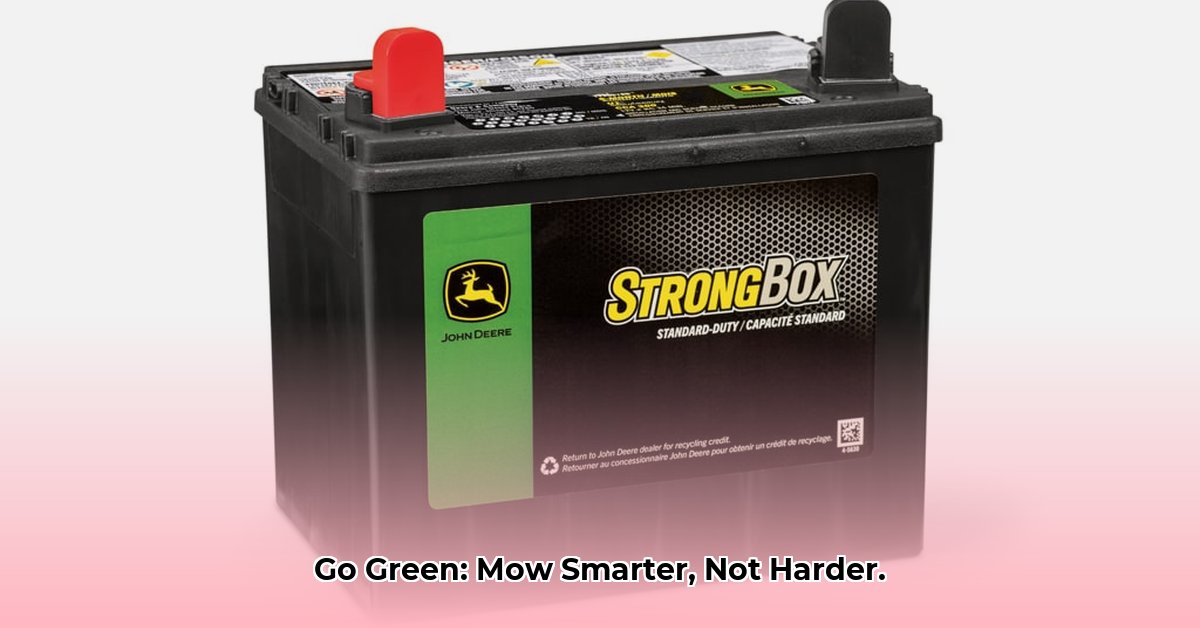
Powering a Greener, Quieter Farm with Electric Lawn Mowers
Thinking about electrifying your farm equipment? Switching to electric lawn mowers and other battery-powered tools, readily available at Tractor Supply and other retailers, offers significant environmental and operational advantages. Let's explore the benefits, challenges, and practical steps involved in making the transition. For more information on local Tractor Supply stores, check out this link.
The Environmental Allure: A Cleaner, Quieter Operation
Electric lawn mowers drastically reduce your carbon footprint. Unlike gasoline-powered models, they produce zero tailpipe emissions, contributing to cleaner air and a healthier work environment. The quiet operation is another significant benefit, reducing noise pollution on your farm and in surrounding areas. "The shift towards electric equipment is not just a trend; it's a necessity for sustainable agriculture," says Dr. Emily Carter, Professor of Chemical and Biomolecular Engineering at Princeton University. This quieter operation also allows you to work longer hours in sensitive areas without disturbing wildlife.
Challenges and Considerations: Real-World Trade-offs
While the environmental benefits are compelling, transitioning to electric lawnmowers presents some challenges. The initial investment cost is often higher than their gasoline counterparts. Battery lifespan and replacement costs are also crucial factors to consider. "Battery technology is rapidly evolving, but the upfront cost and replacement cycle are still significant hurdles for many farmers," notes John Miller, Agricultural Extension Specialist at the University of Illinois. Furthermore, reliable charging infrastructure is essential. Do you have access to readily available power outlets or the capacity to install solar panels to offset electricity costs?
Making the Switch: A Practical Step-by-Step Guide
Ready to embrace electric lawn mowing? Follow these steps for a smooth transition:
- Assess Your Needs: Determine the power requirements for your lawnmowing needs. A smaller battery may suffice for smaller yards, while larger properties might require more powerful options.
- Research Your Options: Explore various brands and models, comparing battery life, charging times, warranties, and overall cost. Read independent reviews to inform your decision. "Thorough research is key," advises Sarah Jones, owner of Sustainable Solutions Farm in Iowa. "Comparing features and warranties from different manufacturers makes a big difference in terms of the total cost of ownership."
- Analyze the Total Cost of Ownership: Calculate the complete cost, considering the initial purchase price, battery replacement costs, charging expenses, and potential government incentives or rebates.
- Plan Your Power Source: Assess your existing power infrastructure. Consider if investing in renewable energy solutions, like solar panels, is feasible to maximize environmental benefits and potentially reduce long-term energy costs.
The Promise of Electric: Long-Term Outlook for Sustainable Farming
The agricultural sector is actively embracing sustainable practices, and the shift towards electric equipment is pivotal. While challenges persist, particularly regarding battery technology and charging infrastructure, the long-term benefits in terms of environmental impact and cost savings are considerable. Electric lawnmowers from Tractor Supply represent a significant step towards a brighter, more sustainable future for farming.
A Balanced Perspective: Weighing the Pros and Cons
| Advantages of Electric Lawn Mowers | Disadvantages of Electric Lawn Mowers |
|---|---|
| Reduced greenhouse gas emissions | Higher initial purchase price |
| Lower running costs (no fuel) | Shorter battery life and replacement costs |
| Quieter operation | Requires access to reliable charging infrastructure |
| Reduced maintenance | Potentially shorter operational range than gas-powered models |
By carefully assessing these factors, you can determine if electric lawn mowers are the right fit for your farm. Remember, battery technology is rapidly advancing, paving the way towards more efficient and sustainable farming practices.
Calculating ROI for Your Investment: A Financial Perspective
Switching to electric farm equipment is an investment, and understanding its financial implications is crucial. Let's look at how to calculate the Return on Investment (ROI) for your electric lawn mower batteries.
A Step-by-Step ROI Calculation
- Determine Initial Investment: Include the battery's purchase price, installation costs (if any), and any necessary equipment upgrades.
- Estimate Annual Savings: Calculate the cost reduction from lower fuel expenses, reduced maintenance, and potential government incentives.
- Project Battery Lifespan: Consider the manufacturer's warranty and typical battery degradation rates to estimate the battery's useful life.
- Calculate Annualized ROI: Divide total estimated savings (over the lifespan) by the initial investment. This figure represents your annual ROI percentage.
- Factor in Depreciation: Account for the battery’s decreasing value over time for a more precise ROI calculation.
Beyond the Numbers: Qualitative Benefits
While the ROI calculation is crucial, qualitative factors like reduced environmental impact, improved working conditions, and the potential for future technological advancements add considerable value to your investment. "Don't just look at the immediate numbers," advises Mark Olsen, Chief Financial Officer at GreenTech Farms, "Consider the long-term environmental and operational advantages."
Key Takeaways:
- Thoroughly analyze the initial investment, potential savings, and battery lifespan to calculate your ROI.
- Consider the qualitative benefits that enhance the long-term value of this investment.
- A well-informed decision based on both financial and environmental factors is essential.